








What is Frozen Shoulder?
Frozen shoulder, medically known as adhesive capsulitis, is a condition that causes pain, stiffness, and restricted movement in the shoulder joint. The shoulder joint becomes inflamed and the protective tissue around it (joint capsule) tightens, limiting your ability to move your arm freely.
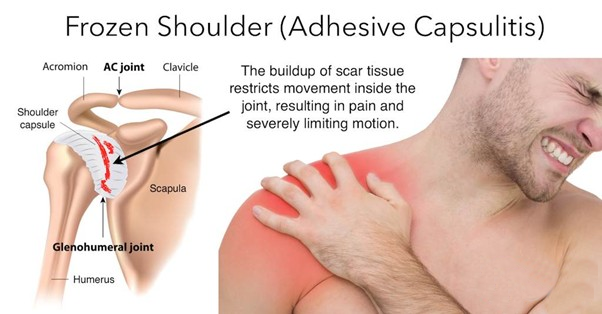
Key Facts:
- Affects approximately 2-5% of the general population
- More common in women and people aged 40-60
- Can develop gradually or appear suddenly without obvious cause
- May occur after shoulder injury, surgery, or from overuse
- More likely if you have diabetes or are immobilized for long periods
Understanding Your Shoulder
Your shoulder is a complex joint made up of:
- Humerus: The upper arm bone
- Scapula: The shoulder blade
- Clavicle: The collarbone
- Joint capsule: Protective tissue surrounding the joint
- Muscles and tendons: Help move and support the joint
In frozen shoulder, inflammatory chemicals accumulate in the joint causing pain and swelling. Over time, the inflamed capsule becomes thick and tight, restricting movement.
Three Phases of Frozen Shoulder
Frozen shoulder typically progresses through three distinct phases:
Phase 1: Freezing Stage (Weeks 0-3 months)
What happens: Pain develops gradually in the shoulder, often triggered by reaching or overhead activities.
Symptoms: Increasing pain with movement, minor stiffness
What you’ll notice: Pain may be worse at night, sleeping on the affected side becomes uncomfortable
Phase 2: Frozen Stage (Months 3-9)
What happens: Pain may decrease but stiffness becomes severe, significantly limiting movement.
Symptoms: Reduced shoulder movement in all directions, loss of both active and passive range
What you’ll notice: Difficulty with daily activities like combing hair, reaching behind your back, or getting dressed
Phase 3: Thawing Stage (Months 9-24+)
What happens: Movement gradually improves as the inflammation resolves and the capsule relaxes.
Symptoms: Gradual return of shoulder mobility and strength
What you’ll notice: Slow improvement with exercises and therapy becoming more effective
Symptoms
You may experience:
- Progressive shoulder pain that may radiate to the upper arm
- Difficulty sleeping on the affected side
- Restricted movement when reaching overhead, behind your back, or across your body
- Stiffness that is often worse in the morning
- Weakness in the shoulder (due to disuse)
- Pain relief measures help less as the condition progresses
How is Frozen Shoulder Diagnosed?
Your doctor will diagnose frozen shoulder through:
- Clinical examination: Tests of shoulder movement and pain response
- Imaging: X-rays or ultrasound to rule out other conditions
- MRI (if needed): Detailed imaging to assess the joint capsule and inflammation
Important: Early diagnosis allows for prompt treatment and better outcomes.
Treatment Options
Frozen shoulder responds well to various treatment approaches. Your doctor will recommend the best option based on your symptoms and their severity:
Conservative (Non-Surgical) Treatment
- Rest and anti-inflammatory medications: NSAIDs like ibuprofen to reduce pain and inflammation
- Physical therapy: Stretching and strengthening exercises crucial for recovery
- Corticosteroid injections: Can significantly reduce pain and improve mobility, especially effective in early stages
- Heat therapy: Warm compresses before exercises to increase flexibility
Advanced Treatment – TAME
For cases that don’t respond adequately to conservative treatment, TAME (Transarterial Musculoskeletal Embolization) offers an innovative solution.
Comments are closed