








What is TAME?
TAME stands for Transarterial Musculoskeletal Embolization. It’s a minimally invasive interventional radiology procedure designed specifically to treat chronic inflammatory conditions like frozen shoulder.
Key Benefit: TAME precisely targets and reduces the persistent inflammation in your shoulder joint that causes pain and stiffness, allowing the tissue to heal and mobility to return.
How Does TAME Work?
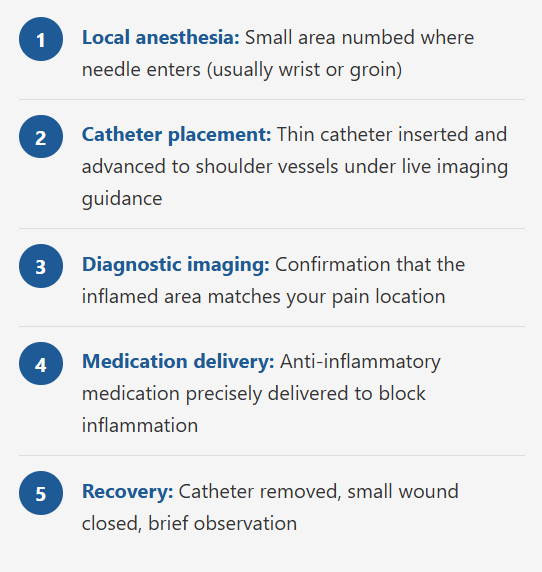
- Identification: Using advanced imaging (fluoroscopy – similar to real-time X-ray), your interventional radiologist visualizes the blood vessels supplying the inflamed shoulder tissue
- Precision delivery: A thin catheter (about the width of a few hair strands) is carefully advanced through these blood vessels to reach the exact area of inflammation
- Anti-inflammatory action: Medication is delivered directly to block the vessels feeding the inflammation, reducing inflammatory chemicals in your joint
- Healing response: As inflammation decreases, your joint capsule relaxes, pain reduces, and movement improves
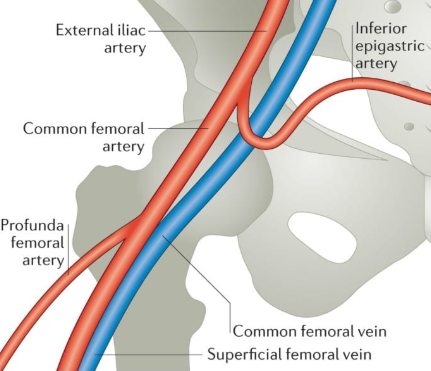
The TAME Procedure Step-by-Step
Why Choose TAME?
✓ Minimally Invasive
No large incisions, only a small needle puncture
✓ Targeted Treatment
Medicine delivered precisely where inflammation exists
✓ Rapid Pain Relief
Many patients experience improvement within weeks
✓ Improved Mobility
Significant restoration of shoulder movement
✓ Quick Recovery
Most patients resume normal activities quickly
✓ Reduces Medication Need
Often decreases reliance on pain medications
Research Shows:
- Significant pain reduction in 80-90% of patients
- Improved shoulder mobility within 4-6 weeks
- Reduced need for surgery or prolonged therapy
- Results maintained long-term (3+ years follow-up)
Before Your TAME Procedure
Preparation Steps
- Medical evaluation: Complete assessment to ensure TAME is appropriate for you
- Imaging: Your doctor may order ultrasound or MRI to confirm inflammation location
- Blood tests: Standard tests to check your health status
- Medication review: Discuss which medications to continue or hold before procedure
- Fasting: Usually fast for 4-6 hours before procedure (your doctor will specify)
Day of Procedure
- Arrive 1-2 hours before scheduled time
- Wear comfortable, loose-fitting clothing
- Bring someone to drive you home (mild sedation may be used)
- Bring insurance cards and identification
- Inform staff of any allergies, especially to contrast dye
After Your TAME Procedure
Immediate Recovery (First 24 hours)
- Rest: Keep your arm in a comfortable position
- Ice: Apply ice packs for 15-20 minutes every few hours to reduce any swelling
- Elevation: Keep your arm elevated when resting
- Pain management: Take prescribed pain medication as directed
- No heavy lifting: Avoid strenuous activities for 24-48 hours
First Week Recovery
- Gradual return to light activities
- Begin gentle range-of-motion exercises as tolerated
- Avoid overhead activities initially
- Continue ice therapy if swelling occurs
- Attend follow-up appointment with your doctor
Ongoing Recovery Timeline
Week 1-2 Gradual improvement in pain, begin range-of-motion exercises
Week 3-4 Noticeable pain reduction, increased shoulder mobility
Week 4-6 Significant improvement in function, can resume most daily activities
Month 2-3 Return to exercise programs, continued strength building
Rehabilitation After TAME
Physical therapy is essential for maximizing your recovery. Your therapist will guide you through progressive exercises:
Exercise Phases
- Phase 1 (Week 1-2): Gentle passive and active-assisted range-of-motion exercises
- Phase 2 (Week 3-6): Active range-of-motion and light stretching exercises
- Phase 3 (Month 2+): Progressive strengthening exercises and functional activities
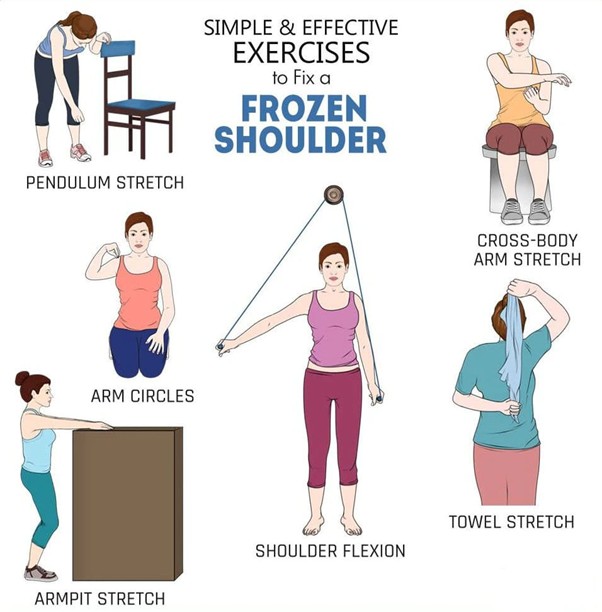
Common Therapeutic Exercises
- Pendulum swings: Gentle circular motions promote early mobility
- Towel stretches: Assist in reaching exercises to improve range
- Wall walks: Progressive overhead reaching activity
- Rotational stretches: Improve internal and external rotation
- Resistance exercises: Strengthen shoulder muscles as healing progresses
Important: Consistency is key! Performing exercises daily as prescribed by your physical therapist will accelerate your recovery.
Potential Risks and Complications
TAME is generally very safe. Serious complications are rare, but as with any procedure, there are potential risks:
Minor Risks (Usually Temporary)
- Mild bruising or soreness at puncture site
- Temporary increase in shoulder pain (usually resolves within days)
- Minor swelling in the shoulder
- Slight bleeding at injection site
Rare Serious Risks
- Infection (extremely rare)
- Allergic reaction to medication or contrast dye
- Blood vessel injury (very rare)
- Nerve injury (extremely rare)
Reassurance: Your interventional radiologist is specially trained in this procedure. All precautions are taken to minimize risks. Report any unusual symptoms to your doctor immediately.
When to Contact Your Doctor
Seek immediate medical attention if you experience:
- Severe or worsening pain not relieved by medication
- Fever (temperature > 101°F / 38.3°C)
- Increasing redness, swelling, or warmth at puncture site
- Pus or fluid drainage from the wound
- Chest pain or difficulty breathing
- Severe arm swelling or color changes
- Loss of feeling or increased weakness in your arm
- Any signs of infection
Prevention and Long-term Management
After Recovery, Maintain Your Results
- Continue gentle exercises: Maintain flexibility with regular shoulder stretches
- Proper posture: Maintain good posture during work and daily activities
- Avoid overuse: Gradually increase activity levels; avoid sudden heavy lifting
- Ergonomic setup: Ensure your workspace supports good shoulder position
- Regular movement: Take frequent breaks during activities involving overhead reaching
- Follow-up care: Keep scheduled appointments with your doctor
Risk Factor Modification
- If diabetic, maintain good blood sugar control
- Manage other chronic conditions with your doctor
- Maintain appropriate activity levels
- Seek prompt treatment for new shoulder injuries
(Click here for the answers to some frequently asked questions about TAME)
Comments are closed