







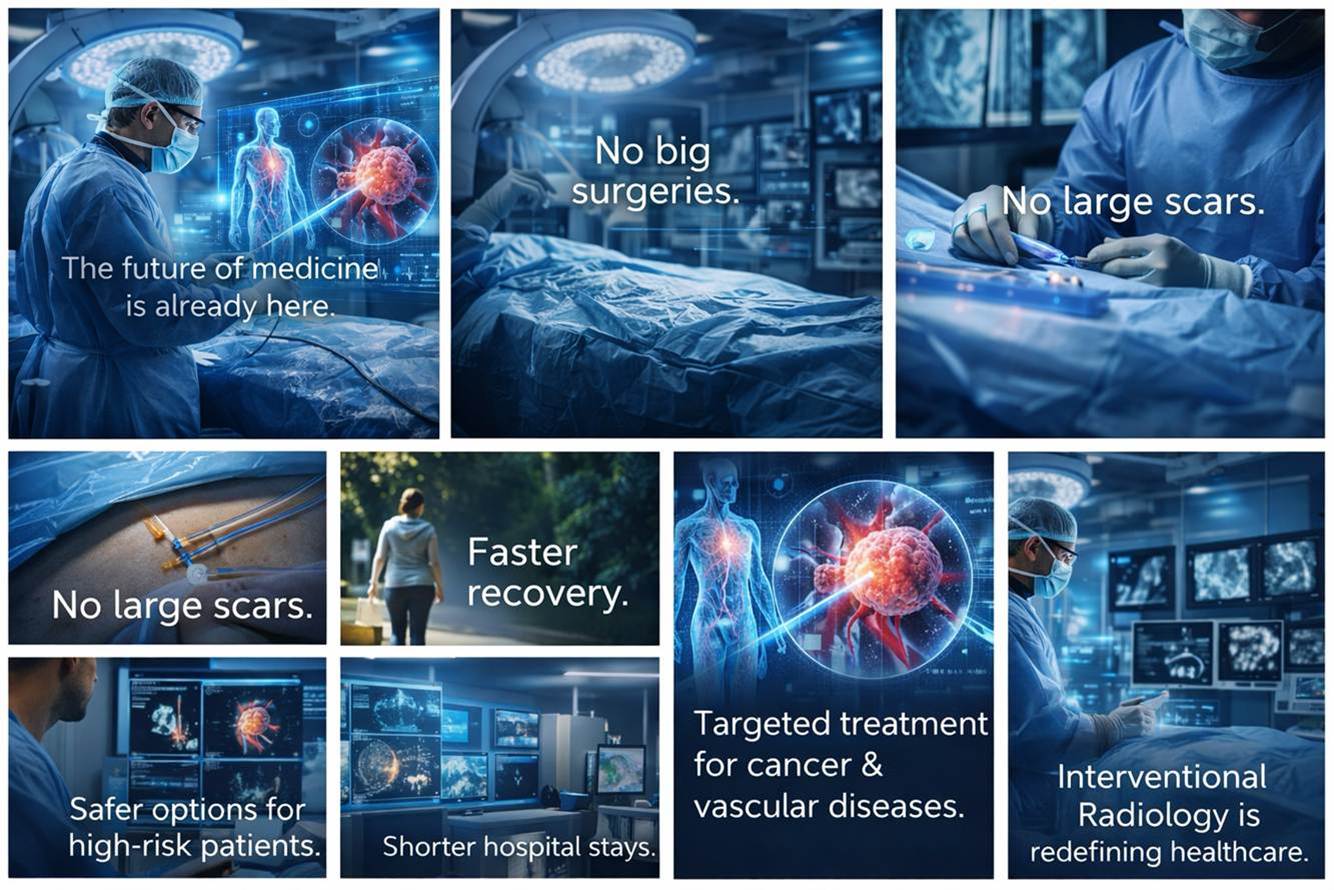
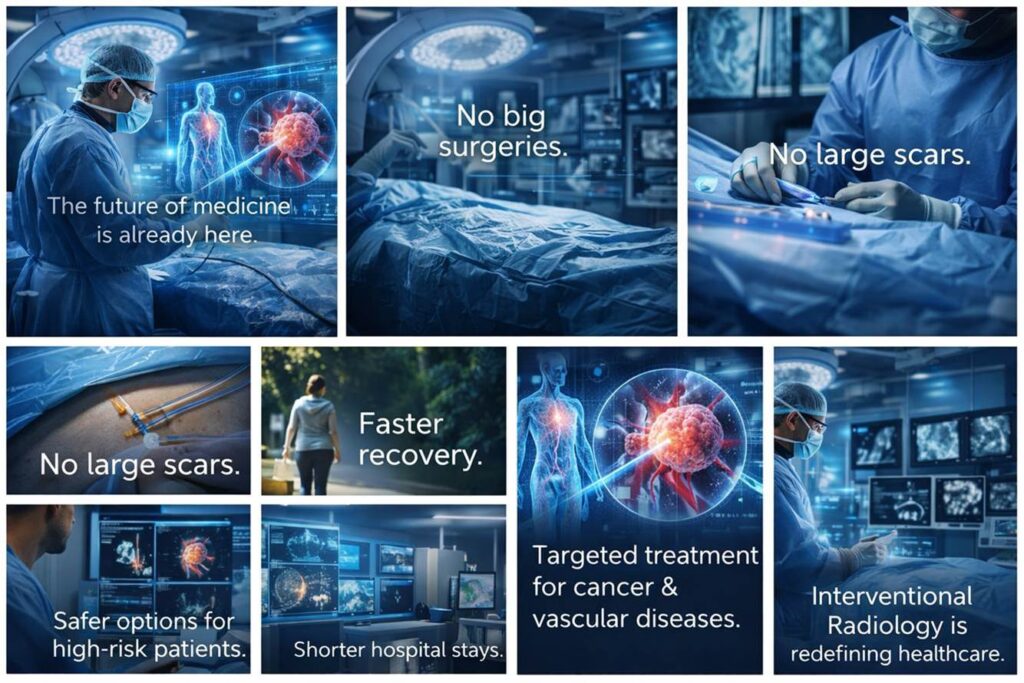
The future of medicine is no longer something we talk about—it is already here. Interventional Radiology (IR) is at the forefront of this change, transforming how many medical conditions are treated today.
By combining advanced imaging technology with highly precise tools, doctors are now able to treat patients in ways that were unimaginable just a few decades ago.
In today’s fast-paced world, patients are more informed and have clear expectations. They want treatments that are effective, safe, and allow them to return to normal life quickly. Many patients prefer to avoid major surgery, the risks of general anaesthesia, large scars, and long hospital stays. This is exactly where image-guided, minimally invasive procedures are making a powerful impact.
Why Image-Guided Procedures Matter Today
Interventional Radiology uses real-time imaging such as ultrasound, CT scans, and X-ray guidance to perform treatments through tiny incisions or small catheters. This approach allows doctors to reach the exact problem area with accuracy, while causing minimal disruption to the body.
How Interventional Radiology Is Changing Healthcare
- Reducing the Need for Open Surgeries-Many conditions that once required major surgery can now be treated through small, minimally invasive procedures. This means fewer complications, less trauma to the body, and better overall outcomes.
- Faster and Less Painful Recovery –Because there are no large incisions, patients experience less pain after the procedure. Recovery time is significantly shorter, with many patients returning to daily activities within days instead of weeks.
- Safer Options for High-Risk Patients-For elderly patients or those with existing medical conditions, traditional surgery may carry higher risks. Image-guided procedures offer safer alternatives with reduced strain on the body and lower risk of complications.
- Targeted Treatment for Cancer and Vascular Conditions-Interventional Radiology allows doctors to treat cancer and vascular diseases with precision. Treatments can be delivered directly to the affected area, reducing damage to healthy tissues and improving effectiveness.
- Lower Healthcare Cost-Shorter hospital stays and quicker recovery reduce overall healthcare costs. Many IR procedures are performed as day-care treatments, helping both patients and healthcare systems save time and resources.
Looking Ahead
As technology continues to evolve, Interventional Radiology will play an even greater role in modern healthcare. Advances in imaging, robotics, and artificial intelligence will further improve accuracy, safety, and patient outcomes.
The future of medicine is clear—less invasive, more precise, and centred around patient comfort and faster recovery. Image-guided procedures are not just changing healthcare; they are redefining how healing happens.