- drkarthik4ir@gmail.com
- MIOT International 4/112, Mount Poonamalle Road, Chennai


- Home
- About
- Conditions
- Arterial
- Aortic Aneurysm
- Aortic Dissection
- AortoIliac Occlusive Disease
- Arterial Pseudoaneurysm
- Peripheral Arterial Disease
- Acute Arterial Thrombosis
- Critical Limb Threatening Ischaemia
- Diabetic Foot
- Visceral Arterial Stenosis/Occlusion
- Visceral Arterial Bleeding
- Visceral Arterial Aneurysm
- Acute/Chronic Mesenteric Ischaemia
- Traumatic Vascular Injury
- Vasculitis
- Vascular Malformations
- Thoracic Outlet Syndrome
- Venous
- Gastrointestinal & Hepatobiliary
- Respiratory
- Urinary Tract & Prostrate
- Obstetrics & Gynaecology
- Musculoskeletal
- Arterial
- Treatments
- Endovascular Interventions
- Digital subtraction angiogram
- Angioplasty/ stenting
- Thrombolysis / mechanical thrombectomy for acute arterial thrombosis
- Haemodialysis Arteriovenous Fistula or graft interventions
- Endovascular arterial atherectomy procedures
- Endovascular treatment of arterial aneurysm /pseudoaneurysm
- Endovascular therapy for vascular malformations
- Endovascular aortic aneurysm repair (EVAR / ESVG)
- Intravascular Foreign body retrieval
- Inferior Vena Cava filter insertion/retrieval
- Endovenous laser/ RFA/ glue ablation for varicose veins
- Percutaneous sclerotherapy of spider/ reticular/ perforator veins
- Venous access (PICC, Hickman, Tunelled dialysis catheter, venous ports)
- Thrombolysis /thrombectomy for deep vein thrombosis (DVT)
- Chronic deep venous recanalisation and stenting
- Oncological Interventions
- Transarterial Chemo-embolisation of liver tumours (TACE)
- Transarterial Radio-embolisation of liver tumours (TARE)
- Intra- arterial PRRT administration for Neuro endocrine tumours
- Portal vein embolisation
- Percutaneous thermal ablation of liver and kidney tumours
- Palliative / pre-operative tumour embolisation
- Radiofrequency ablation of benign thyroid nodules/ goitres
- Ultrasound/ CT guided biopsy of abdominal / retroperitoneal masses
- Ultrasound/ CT guided drainage of abdominal / visceral fluid collections / ascites
- Thyroid artery embolization for large goitre
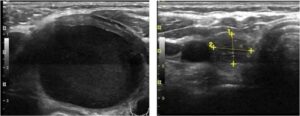
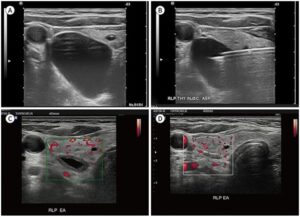
- Thyroid cyst ethanol ablation
- Gastrointestinal & Hepatobiliary
- Percutaneous Biliary drainage / metallic stent insertion
- Percutaneous Biliary brush cytology
- Percutaneous Biliary stone removal
- Percutaneous cholecystostomy
- Transjugular portosystemic stent shunt creation
- Transjugular portosystemic stent shunt reduction
- Hepatic vein or Inferior vena cava stenting for Budd Chiari syndrome
- Hepatic Venous portal gradient measurement
- Plug or coil assisted retrograde Transvenous obliteration for gastric varices
- Balloon occluded retrograde Transvenous obliteration for gastric varices (BRTO)
- Image guided percutaneous gastrostomy / gastrojejunostomy tube insertion
- Nasojejunal feeding tube insertion
- Gastrointestinal stenting
- Haemorrhoid embolization
- Mesenteric arterial embolization for acute bleeding from gastrointestinal tract
- Respiratory
- Bronchial artery embolization for haemoptysis
- Pulmonary arteriovenous malformation embolisation
- Thermal ablation of lung tumours
- Ultrasound/ CT guided biopsy of lung /pleural lesions
- Percutaneous diagnostic pleural tapping
- Ultrasound / CT guided Chest drain insertions
- Fine needle aspiration of cervical nodes / thyroid nodules
- Urinary Tract & Prostate
- Percutaneous Nephrostomy insertion
- Antegrade ureteric stenting
- Ureteral embolization for palliation of bladder tumour bleeding
- Prostate artery embolization for benign prostatic hyperplasia
- Testicular vein embolization for varicoceles
- Adrenal vein sampling
- Embolization of Renal angiomyolipoma, renal tumours
- Embolization of acute bleeding from urinary tract post trauma
- Obstetrics & Gynaecology
- Musculoskeletal
- Ultrasound/ CT guided biopsy of bone/soft tissue lesions
- RF ablation of osteoid osteomas
- Ultrasound guided joint / soft tissue injections
- Embolisation for bleed post trauma
- Preoperative embolization of bone lesions
- Genicular artery embolisation
- Genicular nerve ablation for chronic knee pain
- Transarterial Microembolization (TAME) for plantar fasciitis
- Transarterial Microembolization (TAME) for frozen shoulder & rotator cuff pain
- Image-guided facet joint injections
- Image-guided nerve root block
- Endovascular Interventions
- Publications
- Media
- Contact

Lorem ipsum dolor sit amet, consectet eiusmod tempor incididunt ut labore e rem ipsum dolor sit amet. sum dolor sit amet, consectet eiusmod.
Visiting Hours
| Mon - Fri: | 8:00 am - 8:00 pm |
| Saturday: | 9:00 am - 6:00 pm |
| Sunday: | 9:00 am - 6:00 pm |
Gallery Posts