








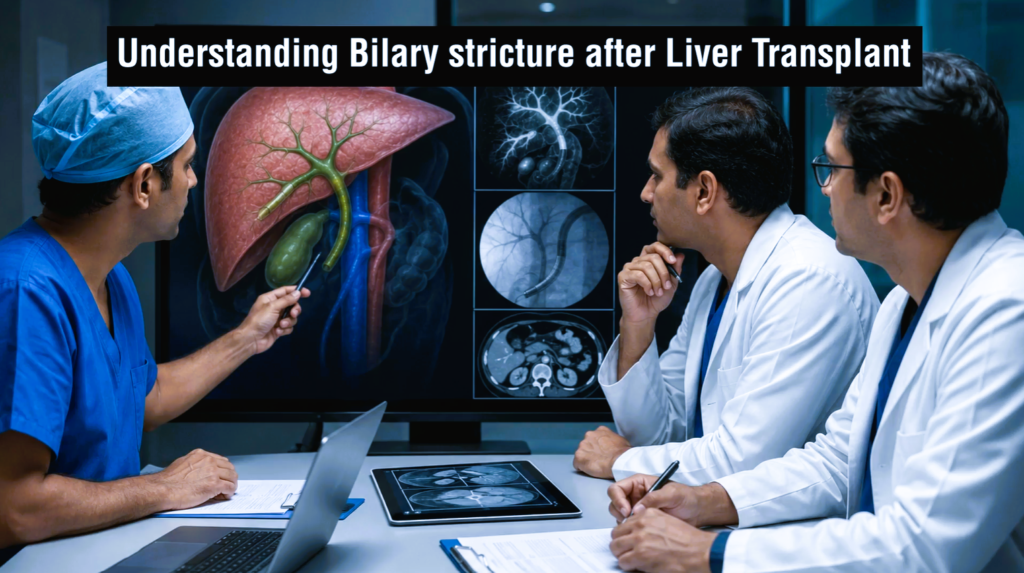
Biliary strictures are among the most frequent complications after liver transplantation, and they can seriously impact graft function and patient quality of life.
Traditionally, endoscopic retrograde cholangiopancreatography (ERCP) with balloon dilatation and stenting is the first-line treatment—but ERCP fails in a significant subset, especially in tight or completely occlusive strictures, altered anatomy, or Roux-en-Y reconstructions.
This is where interventional radiologists step in.
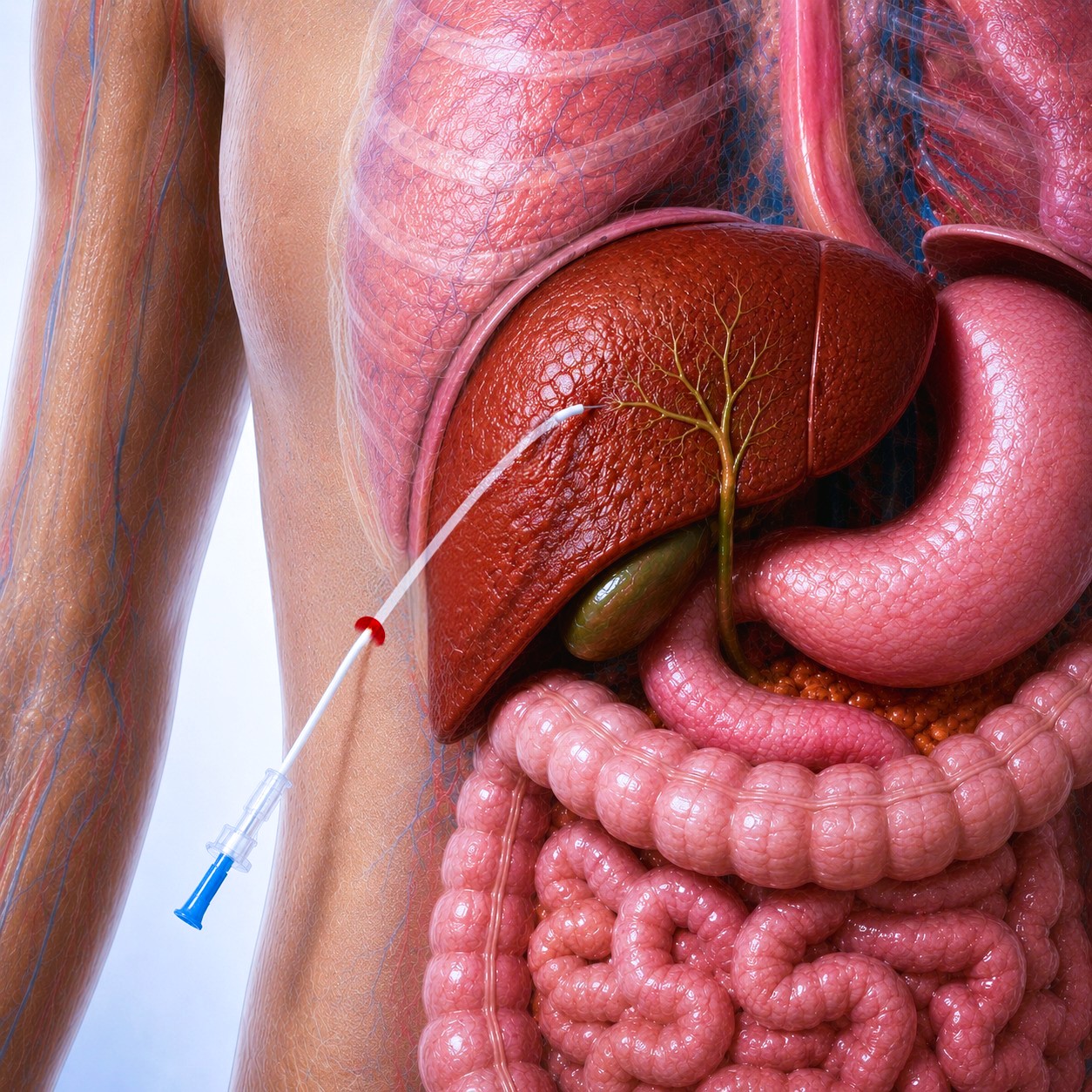
Percutaneous Transhepatic Biliary Drainage (PTBD)
Percutaneous transhepatic biliary drainage has become a cornerstone of post-transplant biliary care.
- Provides rapid decompression in cholestasis and cholangitis.
- Creates a stable access route for cholangiography, balloon dilatation, and internal–external drainage or stenting.
- Offers high technical success with an acceptable safety profile, even in complex post-transplant anatomy.
In many centers, PTBD is now the standard second-line option when ERCP fails—and often the first-line option in Roux-en-Y anatomy.
Magnetic Compression Anastomosis (MCA): The New Frontier
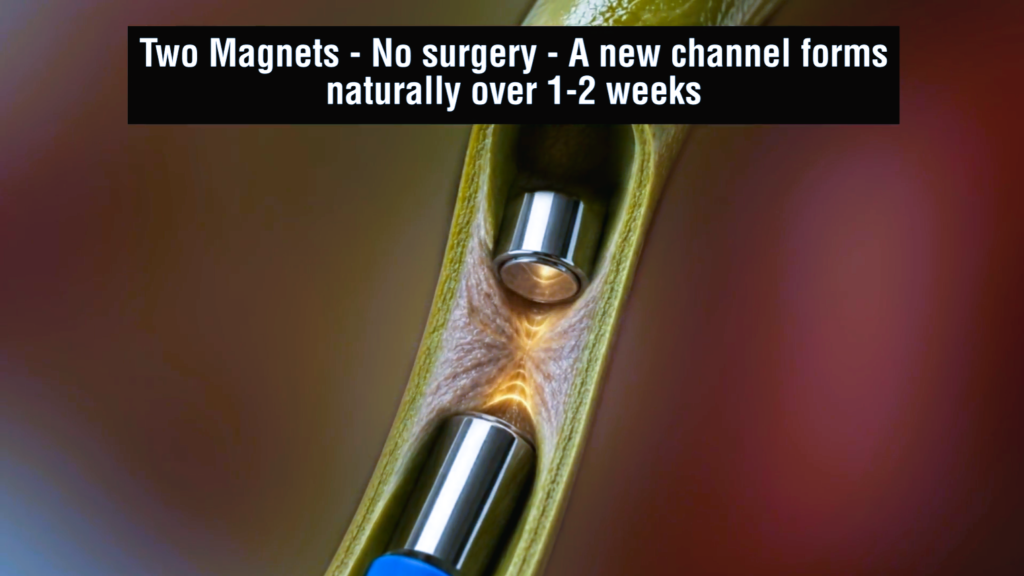
For complete occlusions or refractory strictures where neither ERCP nor conventional percutaneous techniques can cross the lesion, magnetic compression anastomosis is redefining what’s possible.
- Two rare-earth magnets are placed on either side of the obstruction—one via the PTBD tract, the other endoscopically.
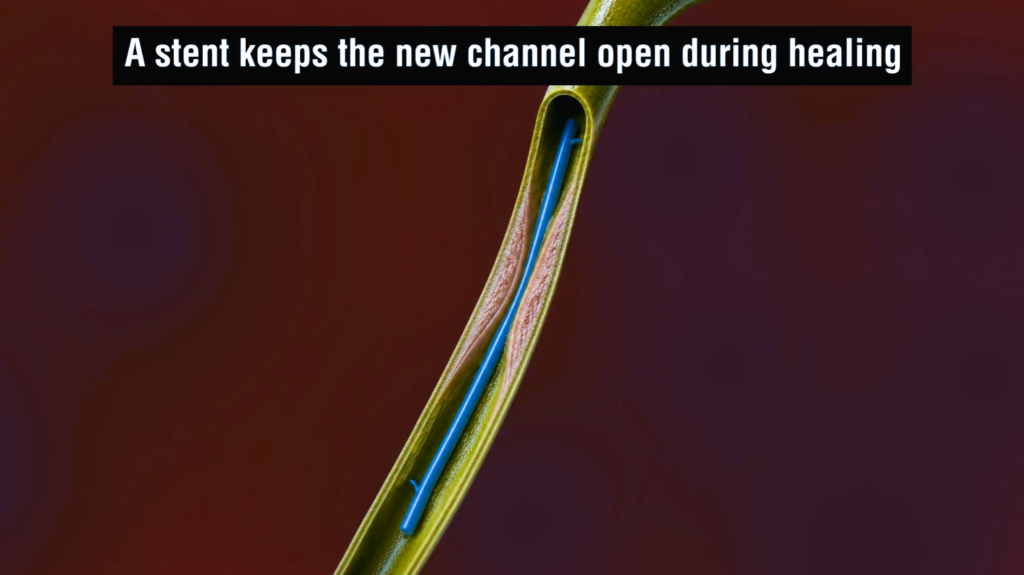
- Magnetic attraction creates a controlled neo-anastomosis over days to weeks, followed by stent placement to maintain patency.
- Early series, including post-transplant benign strictures, show high technical success and durable long-term patency with minimal trauma.
This is a true hybrid technique—endoscopy and IR working together—where the interventional radiologist’s percutaneous access is essential.
Why This Matters for Transplant Programs
Interventional radiology now sits at the heart of multidisciplinary transplant care:
- Extends the minimally invasive treatment window when ERCP fails.
- Reduces the need for surgical revisions and re-transplantation in selected patients.
- Provides longitudinal, image-guided stewardship of the biliary tree in the critical post-transplant period.
As transplant volumes increase, building strong IR–hepatology–endoscopy collaboration—especially around PTBD and MCA—will be key to improving long-term graft and patient outcomes.